Your Career Guide
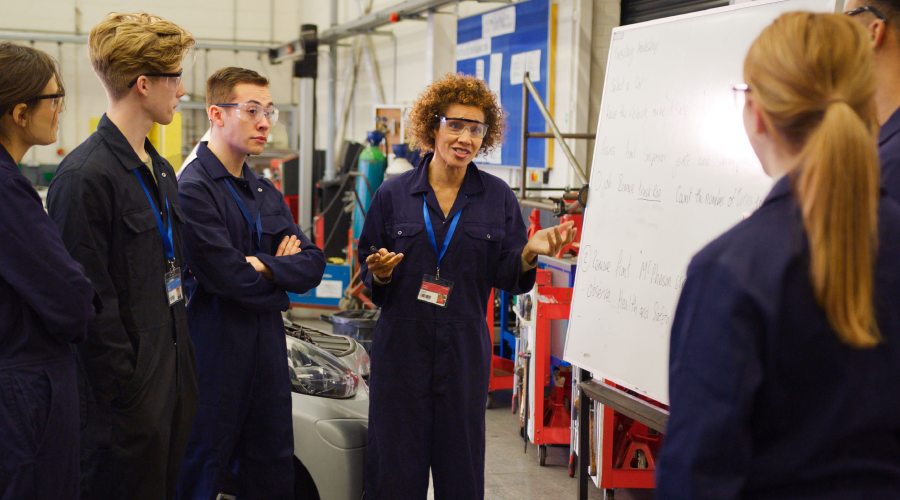

Ontario’s future will be built by skilled people. The challenge is making sure everyone with the ambition to contribute can get started.
After years in food service, Benjamin began noticing how much businesses depended on skilled tradespeople. Whenever the plumbing, heating, refrigeration, or electrical systems in his workplace needed attention, the work was essential and costly. Conversations with the people completing those repairs prompted him to consider whether the skilled trades could offer the future he wanted.
Benjamin began researching apprenticeships and discovered ApprenticeSearch.com. What he found was more than information. He connected with people who could help him understand the system, strengthen his resumé, refresh his trades math, and prepare for employment.
“I felt I now had a team behind me,” he says.
From interest to apprenticeship
Today, Benjamin is a signed sheet metal apprentice working on the new hospital being built in Niagara Falls. He now uses the tools and safety equipment he received while preparing for employment every day on the job.
His story illustrates something important about the future of work: Ontario does not lack people who are interested in skilled trades careers. What many people lack is a clear and supported way to enter them.
The province has ambitious plans for housing, health care, transportation, manufacturing, energy, and other critical infrastructure. Delivering those plans will require a skilled workforce of extraordinary scale. Ontario estimates it will need an additional 400,000 skilled trades workers to support its $236-billion infrastructure plan.
At the same time, people across the province are looking for stable, meaningful careers. They include young people deciding what comes after high school, newcomers trying to translate international experience into the Canadian labour market, women seeking a place in traditionally male-dominated sectors and mid-career workers ready to use their talents differently.
Connecting these people with opportunities should be straightforward. Too often, it is not.
Clearer pathways into the trades
Apprenticeship is a high-value post-secondary pathway, but it can be difficult to navigate from the outside. Prospective apprentices may not know which trade fits their strengths, what training they require or how to find an employer willing to hire and train them. Even after choosing a direction, relatively modest barriers like the cost of work boots, tools, safety certifications or transportation can keep a qualified and motivated person from getting started.
Employers encounter barriers too. Small and medium-sized businesses recognize the need to develop new talent, but hiring and training someone at the beginning of their career requires time, capacity and financial resources. Many need support finding appropriate candidates and creating successful apprenticeship experiences.
ApprenticeSearch.com was created to bridge this gap.
Removing barriers for job seekers and employers
For more than 25 years, ApprenticeSearch.com has helped job seekers explore the skilled trades, understand apprenticeship and connect with employment opportunities. Its work recognizes that a job board alone is not enough. People often need individualized guidance, practical preparation, and someone to help them determine their next step.
I felt I now had a team behind me.
That approach is reflected in Gateway to the Trades, an employment-readiness program delivered by ApprenticeSearch.com that combines job coaching, training, employer connections and practical assistance with expenses such as personal protective equipment, tools and certifications.
The results show what’s possible when workforce development is built around the realities facing both job seekers and employers. Through the initiative, 1,480 Ontarians have been hired into skilled trades employment, and more than 650 new apprenticeships have been created.
Behind every number is a person creating a different future.
Rode left a career in banking and, with personalized guidance and encouragement, became a stonemason apprentice. Samhar arrived in Canada with an engineering degree from Lebanon but little understanding of the Canadian trades system; he is now working as an automotive service technician. Lindsey overcame her anxiety about approaching employers and built a career as a control technician.
Their routes were not identical, and that is precisely the point. Careers are rarely linear, and no single type of person belongs in the skilled trades.
Opening the trades to more people
Encouraging more people to consider these careers remains important. But awareness alone will not build the workforce Ontario needs. We must also invest in the connections between career interest, employment and apprenticeship.
That means making pathways easier to understand, helping employers participate in training, removing practical barriers and ensuring job seekers can access personalized support. It also means recognizing that success is not simply enrolling someone in a program; it is helping that person move confidently into sustainable employment and continue progressing in their career.
Ontario’s future will be built by skilled people. Our task now is to ensure everyone with the talent and ambition to contribute can find a way in.
To learn more, visit ApprenticeSearch.com.