Your Career Guide
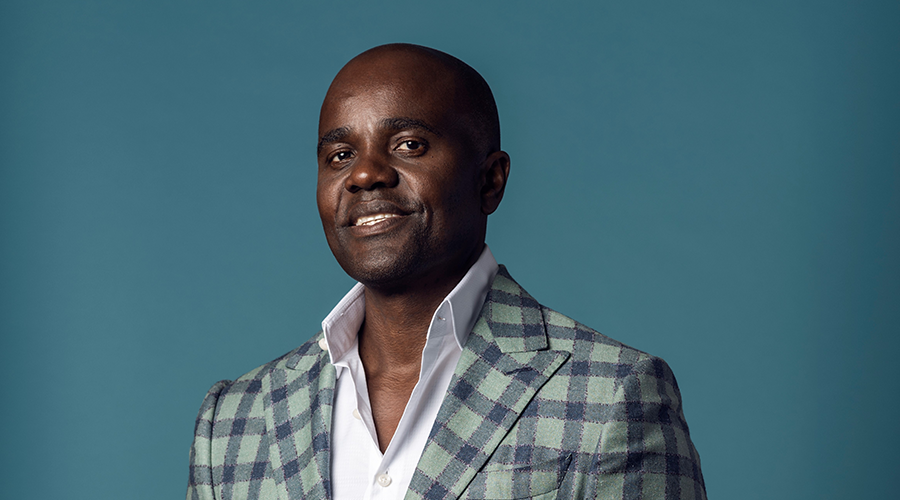
Wes Hall, Founder & CEO of Kingsdale Advisors and Executive Chairman & Founder of WeShall Investments, shares his perspective on taking career risks, building resilience, leading with human judgment in the age of AI, and creating pathways to leadership for underrepresented talent.

What advice would you give to Canadians navigating career changes, taking risks, or trying to create new opportunities for themselves?
The first thing I would tell them is to stop waiting for perfect conditions. Perfect conditions do not exist. They never have.
The people who build meaningful careers and meaningful lives are not the ones who wait until everything lines up. They are the ones who start with what they have and figure out the rest along the way.
Career changes are terrifying because we’re wired to protect what we’ve built. But what most people don’t realize is that the cost of staying somewhere that no longer fits can be far greater than the cost of making a change. You pay for it with your future, ambitions, and the slow erosion of who you really are.
When it comes to risk, I think we need to reframe how we think about it. A risk that doesn’t work out is not the end. It’s the lesson. Every significant thing I’ve built started with a risk that could have gone the other way. I mortgaged my own home to start Kingsdale Advisors because the bank said no. That decision could have cost me everything. Instead, it taught me everything.
The question is never whether the risk is worth it. The question is whether you can afford not to take it.
As technology and AI continue to reshape the workplace, what skills or qualities do you believe will be most important for the next generation of Canadian leaders and entrepreneurs?
The skills that will matter most in an AI-driven world are precisely the ones AI cannot replicate: judgment, empathy, trust, and the ability to make decisions when there is no perfect answer.
AI can process information faster than any human. What it cannot provide is wisdom. It cannot understand the human consequences of a decision or navigate the nuances of leadership. That ability to combine information with judgment is going to become one of the most valuable skills in the workforce.
I also believe storytelling will become one of the most important business skills of the next decade. As automation takes on more technical work, the leaders who stand out will be the ones who can communicate a vision, make complex ideas accessible, and inspire people to take action.
And then there is resilience. Every major opportunity in my career came with uncertainty. The world is changing faster than ever, and the next generation will face challenges we cannot predict today. The leaders who succeed will not be the ones who have all the answers. They will be the ones who can adapt, learn, and keep moving forward when things do not go according to plan.
You cannot download resilience. You build it through experience, through setbacks, and through the willingness to keep going anyway.
What can employers and business leaders do to create more opportunities for people from underrepresented backgrounds to build successful careers and move into leadership positions?
This question is personal to me because someone believed in me when I was just starting my career.
The first thing employers need to do is stop treating diversity as a communications strategy and start treating it as a governance imperative. There is a profound difference between an organization that talks about inclusion and one that has built it into how decisions are made, how talent is identified, and how leadership pipelines are developed. Too many organizations are still in the first category.
Then I would say sponsorship. Mentorship is someone giving you advice. Sponsorship is someone using their influence and credibility to advocate for you in rooms you are not in yet. Research consistently shows that underrepresented professionals are often over-mentored and under-sponsored. Senior leaders should ask themselves a simple question: whose name am I putting forward when an opportunity comes up? Because when leaders do that consistently, opportunities begin to reach people who may otherwise be overlooked.
That is one of the reasons I founded the BlackNorth Initiative. I challenged Corporate Canada to move beyond good intentions and make a public commitment to measurable accountability through the BlackNorth Pledge. More than five hundred organizations stepped forward and signed the pledge, marking an unprecedented collective commitment from business leaders to confront anti-Black systemic racism. The work is far from finished, but the conversation has fundamentally shifted. And that shift happened because leaders chose accountability over comfort.