Your Career Guide



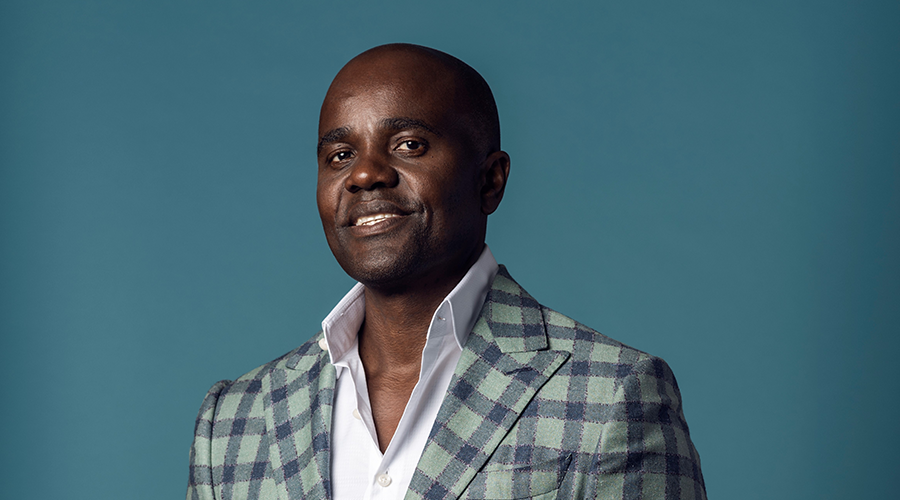
Jon Hunter
Executive Director, UNB Online
CAUCE Executive Committee, Eastern Representative
As the profile of Canadian university students evolves, institutions must adapt to support increasingly diverse pathways through education, work, and lifelong learning.
Our image of a Canadian university student has been a constant: eighteen years old, fresh from high school, living on or near campus, enrolled full-time, and financially dependent on parents or student loans. My situation was strikingly different. Although I shared some of these characteristics (student loans!), I found university infrastructure insufficiently available to someone like me who had scholarships and loans but still needed to work long hours to pay tuition and living expenses. I had ability, but not the profile of the student who universities were designed for. I was “nontraditional.” I still am.
I’ve met countless other “nontraditionals” on my academic and professional journey: the thirty-three-year old changing careers, the single parent taking evening classes, the new Canadian upgrading credentials, and the twenty-year-old studying part-time between shifts at work. There are so many “nontraditionals” that our label has lost its meaning. Meanwhile, many universities are only beginning to catch up.
Rethinking the Traditional Student
The truth is that students have been defying the “straight from high school” mould for decades, and that reality is becoming a permanent, expected feature of education, rather than a “nontraditional” outlier. There are an increasing number of students working substantial hours, with a rising share choosing online, hybrid, and evening delivery. There is a growing interest in part-time and stackable credentials amongst the surge of international and second-career students filling Canadian classrooms. The picture is clear: the “traditional” pathway is now one option among several equally normal pathways.
What’s Driving the Shift
Several forces are driving this. The cost of living has made full-time study without employment income a luxury fewer families can afford, pushing more students into part-time work and part-time study simultaneously. A rapidly changing labour market means credentials earned at twenty are no longer sufficient at forty, and immigration continues to reshape student demographics, as newcomers arrive with prior degrees, work experience, and family responsibilities. And, of course, the pandemic permanently normalized remote and flexible learning, removing geography and rigid scheduling as barriers to enrolment.
Building Universities for Lifelong Learners
Universities that continue to build their systems, calendars, and supports around the eighteen-year-old, full-time, on campus student are underserving a growing percentage of the Canadians they are expected to educate. Building real capacity for this broader student body should be treated as a strategic priority, and a national necessity.
Organizations like the Canadian Association for University Continuing Education are more important than ever in providing leadership, resources, and a national community of practice to help universities respond to the evolving needs of lifelong learners. Institutions like the University of New Brunswick have launched UNB Online to provide “nontraditional” learner-centred options with more flexibility. This includes digitally enhanced courses, fast prior learning and credit transfer procedures, staff and academic positions with expertise on “nontraditional” students, and a growing number of world-class academic and non-credit programs designed to respond to the pace of industry through close employer and community partnerships.
“Nontraditional” learners are not temporary. Universities need to put the students who actually show up to study at the centre of their decision-making instead of prioritizing a system built for a student lifecycle incompatible with the contemporary world.
For our part, “nontraditional” learners can never stop learning. We pursue academic and non-credit programming that responds to our personal and professional journeys to such a degree that what was once considered “nontraditional” has become the ubiquitous lifelong education pathway. Canadian universities must be equipped to provide education experiences of equally high quality to the eighteen and thirty-three-year-old, the single parent, the new Canadian, the part-time student, and many others; and they must be prepared to do so for the entirety of their students’ lives.
What was once considered “nontraditional” is now a common pathway for learners across Canada. To explore flexible learning opportunities, continuing education programs, and alternative routes to university study, connect with a CAUCE member institution for more information.