


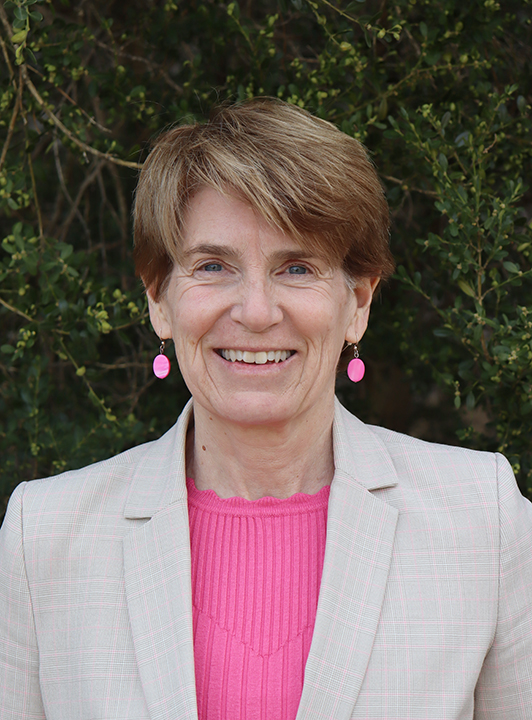
Dr. Dianne Tyers
Assistant Vice-President, School of Continuing Studies, University of Guelph
At the University of Guelph, continuing education is helping Canadians build adaptable capabilities to navigate an ever-changing world of work.
The future of work is often framed as a question of jobs. What existing jobs will disappear? What new jobs will emerge? What technology will change our current job?
But in a world shaped by artificial intelligence and other continually emerging technologies, economic uncertainty, demographic shifts, and constant disruption, the more important question is: Do we have the capabilities to navigate whatever comes next?
Preparing for what comes next
At the University of Guelph’s School of Continuing Studies, we’ve been exploring this question with professionals, employers, and community leaders across multiple sectors. What we’re seeing is a fundamental shift in how we need to think about workforce development as an organization and career development as an individual.
Workforce development is no longer defined by the latest buzz word or hyped-up magic wand. And career success is no longer defined by completing a single credential or a going down a fixed, linear career path. Instead, both depend on our ability to build capabilities that can be applied across changing roles, industries, and technologies.
Four capabilities for the future
These capabilities fall into four interconnected domains:
- Human-centered & inclusive capability: The ability to build trust, communicate effectively, foster belonging, and lead with empathy.
- Systems thinking & sustainable strategy: The ability to see connections, understand complexity, and make intentional decisions that support long-term success.
- Data-informed & ethical decision-making: The ability to interpret information critically, use evidence wisely, and make transparent, accountable decisions.
- Technology-enabled & responsible innovation: The ability to use emerging technologies, including AI, thoughtfully, ethically, and in service of meaningful outcomes.
What’s striking is that these capabilities are needed at every level in an organization, from front line employees to executive decision-makers. These capabilities matter to individuals planning their next career move, managers leading teams through change, and organizations working to remain competitive.
The good news is that these capabilities are not fixed. They can be learned, strengthened, and expanded throughout a person’s career.
That is why continuing education has become an essential workforce strategy for every organization and a crucial career management strategy for every employee. Organizations that invest in employee capability development build resilience. Individuals who invest in their own capability development build adaptability. Both become better equipped to anticipate and proactively respond to change rather than simply react to it or be impacted by it.
Building a future-ready workforce
The future of work will continue to evolve. New technologies will emerge. Labour market demands will shift. Yet one truth will remain constant: organizations and individuals who invest in developing the right capabilities will be better positioned to adapt, grow and thrive, regardless of what comes next.
The question isn’t whether change is coming.
The question is whether we have built the capabilities so that we’re ready for it.
At the University of Guelph’s School of Continuing Studies, we believe readiness begins with capability learning—for organizations and for individuals.
63%
of employers identify skills gaps as the primary barrier to business transformation
Employers expect 39% of workers’ core skills to change by
2030
170
million
of employers identify skills gaps as the primary barrier to business transformation
49%
of learning leaders say executives are concerned employees lack the skills needed to execute business strategy.
Sources: World Economic Forum, Future of Jobs Report 2025. [weforum.org], LinkedIn Learning, Workplace Learning Report 2025. [business.l…nkedin.com]
To learn more, visit uoguelph.ca/continuing-studies.

